Critical Steps in Tractor-Trailer Accident Investigations
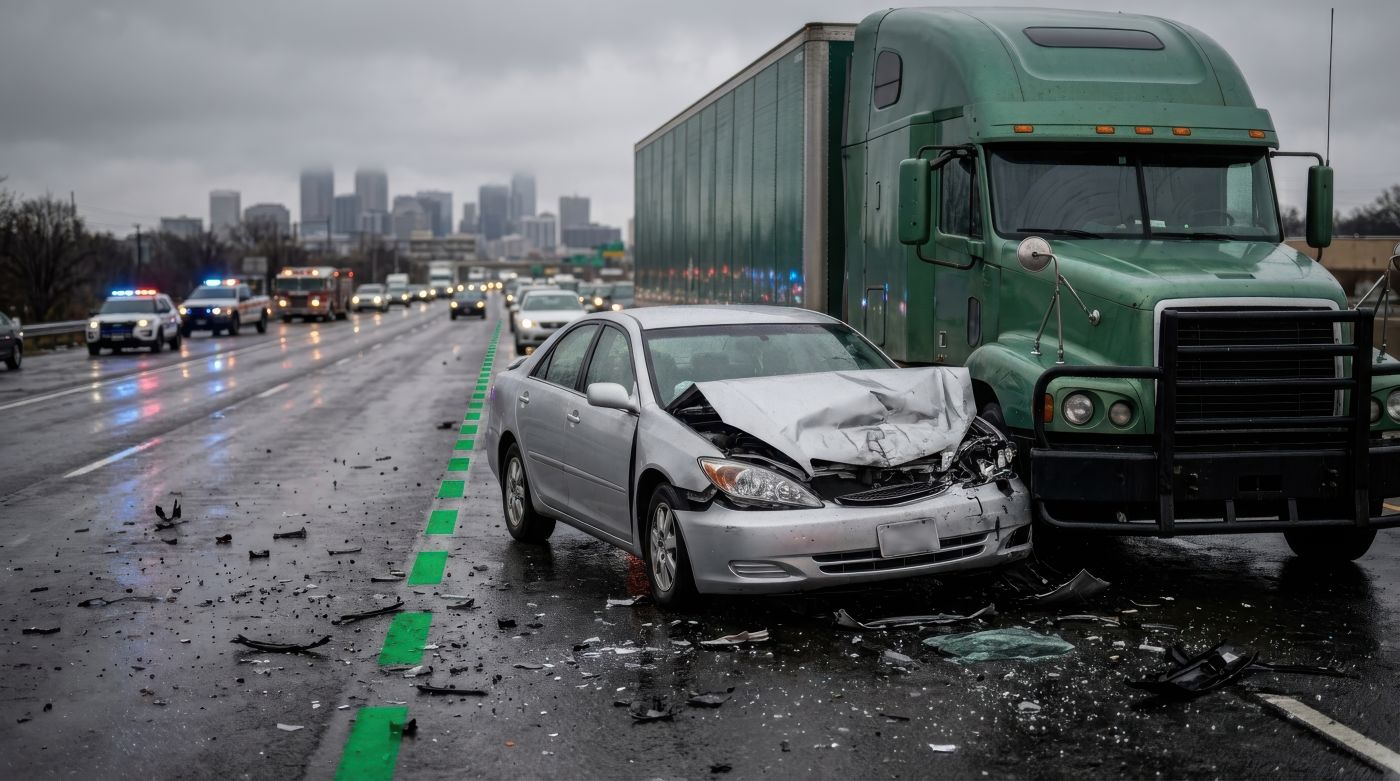
Tractor-trailer accident investigations require evidence from the crash scene, vehicles, drivers, witnesses, and commercial carrier records.
Photos, physical evidence, electronic data, and official reports can help establish how a collision occurred and who was responsible.
Investigators can examine driver qualifications, hours of service, vehicle maintenance, cargo loading, and company records when relevant.
An attorney can help preserve evidence and assess whether the truck driver, carrier, or another party could be liable for an injured person's losses.
A collision involving a tractor-trailer can leave an injured person facing serious physical, financial, and emotional consequences. The size and weight of commercial trucks can produce devastating injuries, while the evidence needed to determine what happened can involve numerous sources beyond the vehicles themselves.
According to the Federal Motor Carrier Safety Administration (FMCSA), 4,848 large trucks were involved in fatal crashes in 2024, with 4,839 fatalities resulting from those crashes. These figures demonstrate why careful investigation matters when a commercial truck collision causes significant harm.
At Townsend Law, LLC, we help injured clients assess the circumstances surrounding serious truck collisions and pursue appropriate legal remedies. Located in Overland Park, Kansas, our firm serves clientsacross the Kansas City metropolitan area, Johnson County, Wyandotte County, Clay County, Cass County, Platte County, and Jackson County, and throughout the states of Kansas and Missouri. Contact us to discuss the circumstances of a tractor-trailer accident and the steps that can help preserve a potential claim.
The first stage of a thorough investigation involves documenting what happened at the scene. Physical evidence can change quickly after a collision because vehicles are moved, debris is cleared, road conditions change, and damaged trucks can be repaired or removed.
Photographs and measurements can help establish vehicle positions, points of impact, roadway conditions, skid marks, debris patterns, and visible damage. Investigators can also review police reports and statements from people who witnessed the collision.
Important scene evidence can include:
Vehicle damage: Photographs and inspection records can show where and how the vehicles were struck.
Roadway conditions: Weather, lighting, traffic controls, lane markings, and surface conditions can contribute to the investigation.
Physical markings: Skid marks, tire marks, debris, and other traces can help establish vehicle movement before impact.
Witness accounts: Statements from drivers, passengers, pedestrians, and other witnesses can provide additional information about the collision.
Scene photographs: Images taken before vehicles or debris are removed can preserve details that aren't available later.
Preserving this information early can give investigators a clearer picture of the collision. It can also provide evidence that supports or challenges accounts provided by the parties involved.
A tractor-trailer investigation doesn't stop at the crash site. The truck itself can contain evidence about its condition before the collision, while information about the driver and commercial carrier can reveal circumstances that contributed to the crash.
Investigators can examine the tractor, trailer, tires, brakes, lights, steering components, and other safety-related equipment. If mechanical problems are suspected, inspection and maintenance records can become particularly important.
Electronic information can also provide valuable details. Depending on the truck and available systems, investigators can examine event data, electronic logging information, GPS records, onboard systems, or other records that document vehicle operation.
Driver-related information can include licensing qualifications, training, driving history, drug and alcohol testing records, and compliance with applicable hours-of-service requirements. An experienced lawyer can determine which records are relevant to a particular collision.
These sources can help establish whether the crash resulted from driver conduct, a mechanical issue, inadequate maintenance, excessive hours behind the wheel, or another contributing factor.
Commercial trucking companies are responsible for maintaining extensive records concerning their vehicles and operations. Those records can become important when investigating whether a carrier's practices contributed to a collision.
Records that can warrant investigation include:
Maintenance documents: Service schedules, repair invoices, inspection reports, and records of recurring mechanical problems.
Driver qualification files: Information concerning licensing, training, employment history, and required qualifications.
Hours-of-service records: Electronic logging data and other documentation concerning driving and rest periods.
Cargo records: Loading information, weight records, and documentation relevant to how the trailer was loaded.
Company communications: Dispatch instructions, messages, schedules, and other communications connected to the driver's work.
A thorough investigation doesn't assume that the truck driver is the only potentially responsible party. A carrier, maintenance provider, cargo loader, manufacturer, or another party can become relevant depending on the evidence.
Our attorney can review the available information surrounding a truck collision and help identify records that deserve closer examination. Preserving those records quickly is particularly important because some forms of electronic or business data aren't retained indefinitely.
Once evidence has been collected, investigators can compare the different pieces of information to develop a clearer account of the crash. This process can involve reviewing photographs, vehicle damage, physical evidence, witness statements, electronic records, medical documentation, and official reports together.
Accident reconstruction can also become relevant when the cause or sequence of events is disputed. Reconstruction professionals can analyze vehicle speeds, impact points, movement patterns, roadway evidence, and other physical details to assess how the collision occurred.
Medical records provide another important part of the investigation. They can connect the injuries to the collision and document the treatment required afterward. Employment records, financial documentation, and other evidence can help establish the economic effects of the injuries.
The goal isn't simply to show that a crash occurred. A strong investigation seeks to establish what happened, why it happened, who contributed to it, and how the collision affected the injured person.
Our attorney works with clients who have suffered harm in serious motor vehicle collisions. We help clients examine the available evidence and pursue claims based on the facts and losses involved.
A tractor-trailer accident investigation should go beyond simply reviewing the police report. Examining the vehicles, driver records, carrier documents, electronic information, physical evidence, and resulting injuries can help establish a more complete account of what happened.
At Townsend Law, LLC, we assist injured clients with serious collision claims by evaluating available evidence and addressing the legal issues connected to their injuries. Contact us to discuss your circumstances with our personal injury attorney and learn what steps can be taken to investigate your claim.
Commercial truck collisions can involve additional evidence, including driver qualification records, electronic logs, maintenance documents, cargo information, dispatch records, and carrier policies. Investigating these sources can provide a more complete picture of the factors that contributed to the collision.
Important evidence can include photographs, police reports, medical records, vehicle damage, witness information, trucking logs, maintenance records, electronic data, cargo documentation, and communications involving the driver or carrier.
We help clients examine the circumstances of a truck collision, identify potentially relevant evidence, assess liability issues, and pursue compensation for qualifying losses. Our personal injury attorney can also address disputes with insurers and other parties involved in the claim. We'll review driver, carrier, and maintenance records to determine whether compliance issues or equipment conditions may have contributed to the collision.